
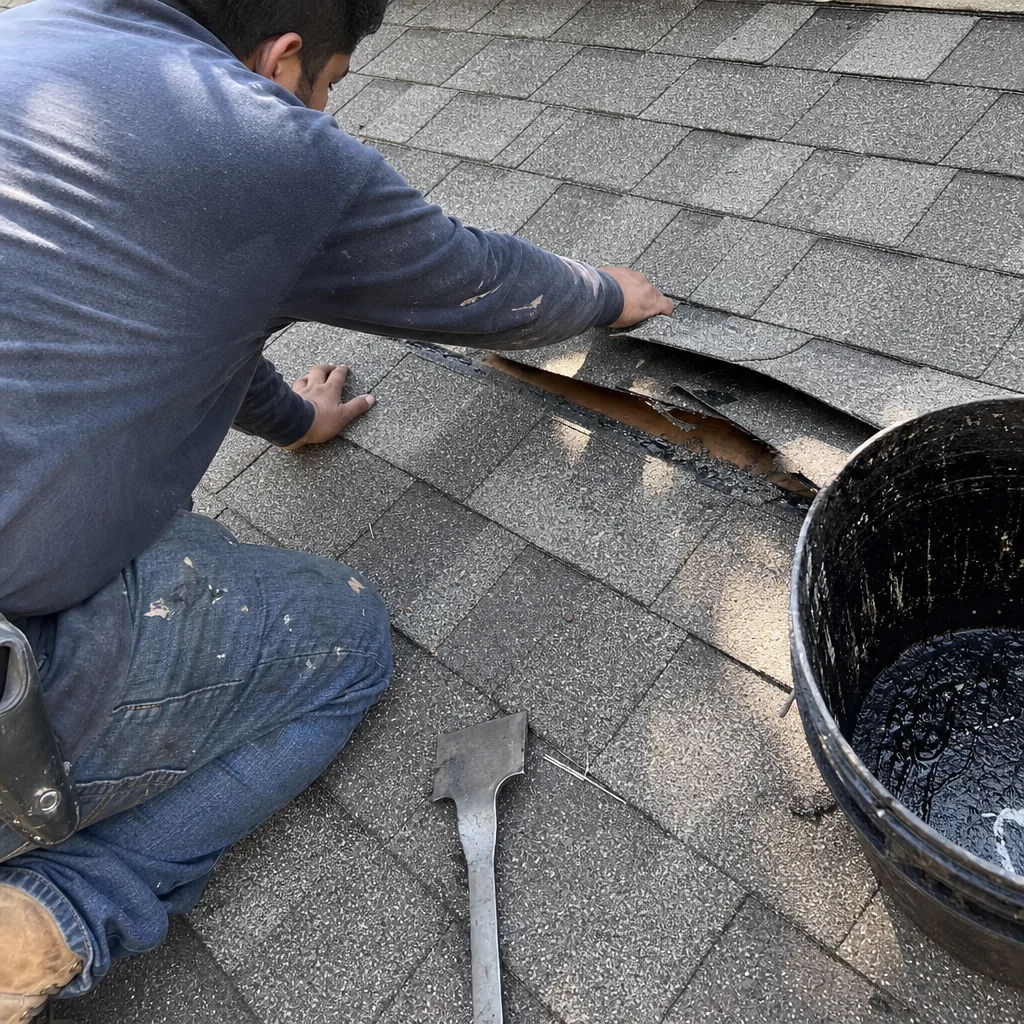
Boral Flashing Replacement: The San Antonio Owner’s Guide
Boral flashing replacement in San Antonio typically runs $280-$520 installed, depending on roof pitch and how many linear feet need work. We stock Boral-compatible step flashing, counterflashing, and apron flashing for same-day installation on most San Antonio homes. Most homeowners discover the problem during a hard rain, when water starts showing up at a wall-to-roof junction that used to stay dry.
The Hill Country’s combination of intense UV, spring hail, and those sudden summer downpours works hard on metal flashing. Boral’s clay and concrete tile systems depend on properly integrated flashing to channel water away from valleys, chimneys, and sidewalls. When the flashing corrodes, lifts, or separates from the tile underlayment, water finds the path of least resistance - usually into your fascia or interior walls.
Which Boral Models This Applies To
Boral flashing replacement covers their full tile line: Saxony 900 and 1000 series concrete tile, Barcelona and Mission clay profiles, and the lightweight Smog-Eating Tile used in some Alamo Heights and Terrell Hills installations. The critical detail is matching the flashing gauge and profile to your specific tile height and exposure. Boral’s concrete tile typically needs 26-gauge galvanized or painted steel flashing with a 4-inch minimum vertical leg; their clay profiles often require a deeper 5-inch leg to clear the thicker tile butt.
We carry both OEM Boral flashing and quality aftermarket equivalents from Custom-Bilt Metals and FEMAP that meet Boral’s published specifications. The OEM part guarantees exact color match on painted finishes, but we’ve found the aftermarket galvanized with field-applied Boral touch-up paint holds up identically in San Antonio’s climate at roughly 15% lower cost. To identify your part, check the underside of your tile for the stamped model number, or measure the tile exposure (the visible portion) and the vertical wall height where the flashing terminates. Mixing flashing depths - say, using standard 4-inch on a heavy-profile Barcelona installation - is the most common compatibility mistake we correct on other contractors’ work.
Signs Your Boral Flashing Replacement Is Failing
- Water stains on interior walls near roof junctions. This usually means step flashing has separated from the wall or the underlayment has slid. On Boral tile systems, the flashing is meant to work as a system with the two-ply underlayment; when one layer fails, water bypasses the other.
- Rust streaks running down exterior walls or tile faces. Galvanized flashing in San Antonio’s sun typically lasts 20-25 years, but poor drainage or debris accumulation accelerates corrosion at the bend points. We see this most often on north-facing walls where moisture lingers.
- Lifted or displaced tiles at valleys or chimneys. Boral’s interlocking tile design depends on the flashing maintaining a secure anchor point. When flashing pulls loose, tiles can shift in wind, exposing the underlayment to UV damage and creating a cascade failure.
- Visible gaps between flashing and mortar or sealant. Many San Antonio homes have mortar-set Boral tile at headwalls and chimneys. The mortar cracks, the flashing underneath was never properly extended, and water enters behind the facade.
- Musty odors in attic spaces after rain. Slow leaks at flashing points often evaporate before reaching living spaces but saturate insulation and decking. By the time you smell it, the decking may need sistering or replacement.
Replacement Cost & What’s Included
| Scope | Typical Range |
|---|---|
| Single wall junction (up to 15 linear ft) | $280-$380 |
| Chimney saddle and step flashing | $420-$520 |
| Valley flashing replacement (open valley) | $340-$480 |
| Multiple failure points, full assessment | $480-$680 |
These are installed prices for San Antonio, including removal of failed flashing, inspection of underlying decking and underlayment, installation of new Boral-compatible material, and reintegration with existing tile. What drives the range: roof pitch (steeper means more labor), accessibility, and whether we find degraded decking that needs repair before new flashing goes in. We quote the full number before we start - the price we quote is the price you pay. Every flashing replacement carries our 90-Day Done Right Promise: if water gets past our work, we come back and make it right, no paperwork, no arguing.
DIY or Call Us?
There’s a safe middle ground here. A homeowner can walk the perimeter with binoculars, check attic spaces after rain, and clear debris from valley areas - all useful information to share when you call. But Boral tile flashing replacement is not a weekend project. The tiles must be carefully lifted without cracking, the underlayment inspected for hidden damage, and the new flashing integrated with the existing system so water flows over, not under. On a pitched roof, one misstep is a long fall. We’ve been called to fix DIY flashing jobs in Monte Vista and Olmos Park where the owner saved $200 on labor and spent $1,800 correcting water damage six months later.
If you’re seeing any of the symptoms above, call (833) 756-5022. We’ll send a background-checked, uniformed technician who’ll photograph your roof from the surface, show you exactly what failed, and give you an upfront number before any work starts. Most flashing replacements finish in a single visit.
FAQs
Properly installed galvanized flashing in San Antonio’s climate typically lasts 20-25 years, though homes in heavily treed areas like Alamo Heights may see faster corrosion from trapped moisture and leaf acids. Painted or Kynar-finished flashing can extend that toward 30 years if drainage stays clear. Call (833) 756-5022 and we’ll assess what’s on your roof now - estimates are free.
Small, isolated rust spots can sometimes be treated and sealed if the metal is still structurally sound and the underlayment beneath is dry. But once flashing shows widespread corrosion, lifting, or separation from the wall, repair is a temporary patch that usually fails within one or two rainy seasons. We don’t recommend spending money twice on the same problem. Call (833) 756-5022 for an honest assessment - we’ll tell you if repair makes sense.
Most residential flashing replacements take 3-5 hours from arrival to cleanup, including tile removal, decking inspection, new flashing installation, and tile reintegration. Chimney saddles or complex multi-plane junctions may extend to a full day. We complete most jobs in a single visit, and you’ll get photo documentation of the finished work before we leave.
We carry Boral-compatible step flashing, apron flashing, and counterflashing in the most common gauges and profiles, plus the specialized fasteners and sealants Boral’s system requires. For color-matched painted finishes on older installations, we may need to order from our San Antonio supplier - typically a 24-48 hour turnaround. We’ll know exactly what’s needed after our inspection and will tell you upfront if same-day completion is possible.
Ridgeline Roofing Co. of San Antonio is an independent service provider and is not affiliated with Boral Roofing. We are an authorized installer of Boral products, along with GAF, Owens Corning, CertainTeed, IKO, Atlas, and Tamko.
A roof either holds or it doesn’t. We build ones that hold.
Written by Cecil Hargrove, Owner, Ridgeline Roofing Co. of San Antonio at Ridgeline Roofing Co. of San Antonio, serving San Antonio and nearby areas.