
GAF Flashing Replacement: The San Antonio Owner’s Guide
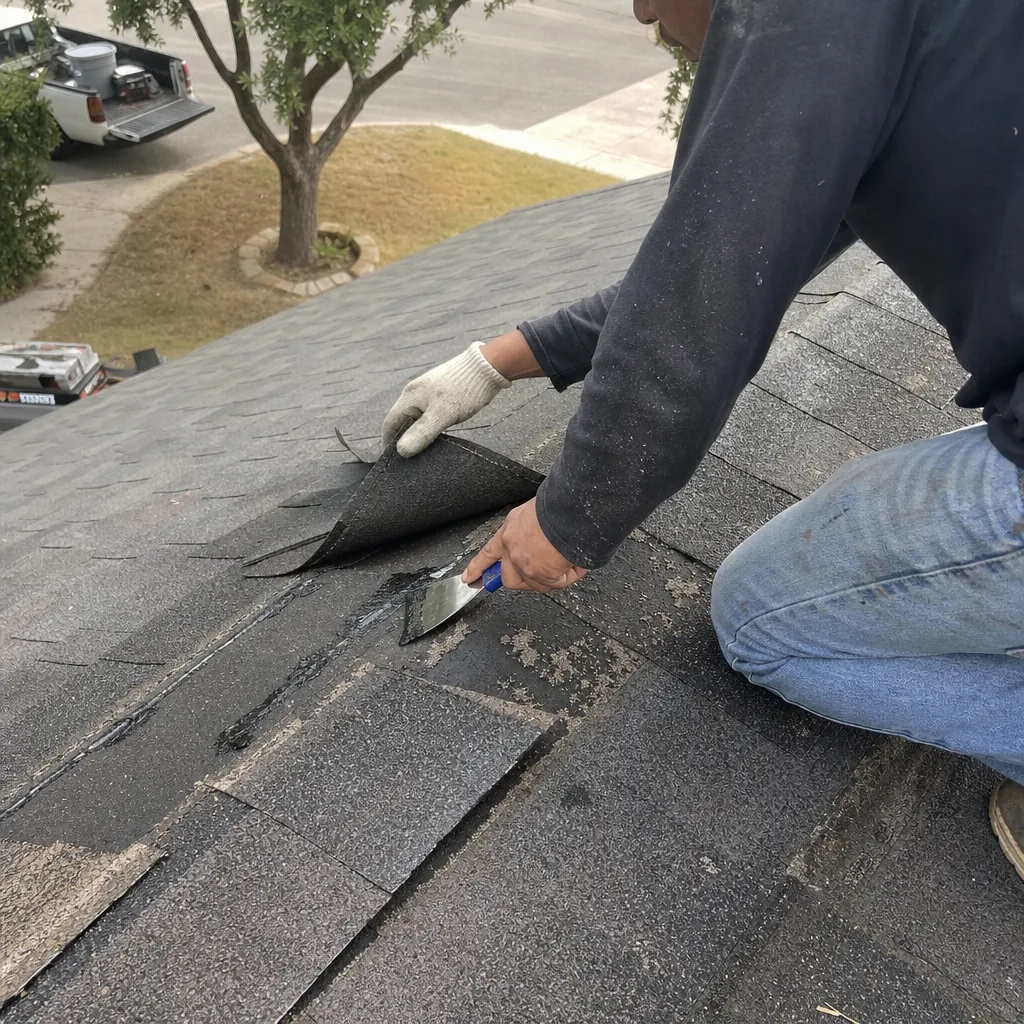
GAF flashing replacement in San Antonio typically runs $280-$520 installed for standard eave and valley applications, with most jobs completed same-day if we get your call by early afternoon. We stock GAF-compatible step flashing, counter flashing, and specialty valley metal on every truck, sized for the Timberline HDZ, Timberline UHD, and Royal Sovereign lines that dominate roofs across Alamo Heights, Stone Oak, and the near-west neighborhoods. Most San Antonio homeowners discover their flashing has failed during a hard rain, when water shows up at a ceiling corner or runs down an interior wall - the exact spot where roof plane meets wall, dormer, or chimney, and where the thin metal that’s supposed to channel water away has corroded, lifted, or pulled free.
Which GAF Models This Applies To
GAF flashing isn’t one-size-fits-all. The Timberline HDZ, the most common shingle we see in San Antonio, uses standard 8″ × 10″ step flashing at wall intersections, with a minimum 4″ vertical leg and 4″ horizontal embed beneath each course. The Timberline UHD, with its thicker profile, sometimes requires extended 10″ vertical legs to maintain proper overlap. Royal Sovereign three-tab roofs, still holding on across older neighborhoods like Prospect Hill and Monte Vista, use the same base dimensions but with lighter-gauge accessory metal.
Here’s where owners get tripped up: GAF’s Cobra ridge vent systems and WeatherBlocker premium eave rails integrate with specific flashing profiles. Mix a standard aftermarket drip edge with a GAF-designed eave protection system and you create a gap where wind-driven rain enters. We carry both OEM GAF accessory metal and quality aftermarket equivalents from Quality Edge and Boral that match GAF’s spec sheets - we choose based on what’s actually on your roof, not what’s cheapest on the truck. To identify your part, check the shingle bundle wrapper in your garage or look for a GAF model stamp on the underside of existing drip edge; if you can’t find it, we measure on-site.
Ridgeline Roofing Co. of San Antonio is an independent service provider, not affiliated with GAF. We’re authorized to install their systems, but we answer to you, not a manufacturer.
Signs Your GAF Flashing Replacement Is Failing
- Water stains at ceiling-wall joints. This is the classic tell. When step flashing pulls away from the wall or corrodes through at the bend, water follows the top edge of the shingle course and finds the path of least resistance - usually your drywall corner. In San Antonio’s spring storm season, one lifted corner can move gallons of water inside before you notice the stain.
- Rust streaks running down exterior walls or brick. Galvanized flashing has a 20- to 30-year life in South Texas, but the alkaline runoff from oak and pecan tannins accelerates corrosion at the drip points. Those reddish-brown streaks below a chimney or dormer mean the metal is thinning and will soon perforate.
- Lifted or buckled shingles at valleys or walls. Flashing that wasn’t properly fastened or has worked loose from thermal cycling lifts the shingle edge, creating a funnel instead of a channel. We’ve seen this especially on west-facing slopes in Terrell Hills and Olmos Park, where afternoon sun drives expansion and contraction.
- Visible gaps where caulk or sealant has dried and fallen out. GAF systems rely on metal overlap, not caulk, for waterproofing - but many installers use sealant as a shortcut. When that caulk fails after three to five years, the joint is exposed. We see this on newer roofs more often than old ones, usually from a crew that didn’t read the detail drawings.
- Musty smell in attic spaces after rain. Slow leaks at flashing joints rarely show inside immediately. They soak insulation and rafters first. If your attic smells damp even when the ceiling looks dry, trace the rafters uphill to the nearest wall or penetration - the flashing is almost always the culprit.
Replacement Cost & What’s Included
| Component | Typical Range (San Antonio) |
|---|---|
| Standard step flashing replacement (per linear foot) | $18-$32 |
| Chimney counter flashing (full rebuild) | $340-$580 |
| Valley flashing replacement (open or woven valley) | $420-$760 |
| Drip edge / eave flashing (full perimeter) | $280-$440 |
| Wall penetration flashing (vents, pipes) | $140-$260 each |
What drives the range: accessibility (steep pitches cost more in labor and safety setup), how much surrounding shingle we need to remove and replace, and whether the underlying decking has taken moisture damage. We quote upfront, with the number on the estimate matching the number on the invoice. Every flashing replacement carries our 90-Day Done Right Promise - if water finds a path we missed, we come back and make it right, no paperwork, no arguing. Materials are covered by manufacturer warranty; our labor guarantee is written and immediate.
DIY or Call Us?
There’s a safe middle ground here. A homeowner can check attic spaces for active drips during rain, photograph rust streaks from the ground with a zoom lens, and clear gutters so water isn’t backing up against flashing joints. What you should not do: climb a ladder to pry at flashing, attempt to reseal joints with hardware-store caulk, or bend replacement metal by hand. Flashing replacement requires removing shingle courses without tearing them, fastening at precise elevations to maintain watershed, and integrating with existing underlayment - work done from a ladder or roof edge, often on a slope, with sharp metal edges and the risk of a fall.
We’ve been called to fix DIY flashing jobs in Beacon Hill and King William where the owner saved $200 and cost themselves $1,800 in water damage. If you’re unsure, call us at (833) 756-5022. We’ll look at it, tell you honestly whether it’s urgent, and give you a number you can plan around.
FAQs
Standard galvanized flashing lasts 20 to 30 years in Bexar County, but the combination of intense UV, hail impact, and acidic leaf litter from live oaks can push that toward the lower end. Premium Kynar-coated aluminum or copper flashing, which we install when the budget allows, can exceed 40 years. If your flashing is original to a 1990s roof, it’s living on borrowed time - call (833) 756-5022 for a free inspection and we’ll tell you what you’re working with.
Small sections with minor lifting can sometimes be refastened and resealed if the metal is sound and the surrounding shingles are intact. But once corrosion has started or the bend geometry is compromised, repair is a temporary patch that delays the inevitable. We don’t sell patches that fail in six months - if replacement is the honest answer, we’ll say so. Estimates are free; call (833) 756-5022.
Most residential flashing replacements are completed in two to four hours on the roof, with one of our background-checked, uniformed technicians working methodically through removal, decking inspection, new metal installation, and shingle replacement. Chimney counter flashing or full valley work can extend to a full day. We schedule for arrival, not for a window - we’ll be there when we say.
Yes. We carry GAF-compatible step flashing, drip edge, and valley metal in standard dimensions, plus coil stock for custom fabrications at chimneys and odd wall angles. For specialty GAF accessory pieces on older systems, we source overnight from San Antonio suppliers - but 90% of what we encounter is on the truck already. A roof either holds or it doesn’t. We build ones that hold.
If your ceiling stain just appeared or you’ve been watching that rust streak darken for months, call (833) 756-5022. A live person answers, day or night, and we’ll get a technician out to document your roof with photos and give you an honest price. No storm-chaser pressure. No fine print. Just the square deal we’ve been offering San Antonio homeowners since 2016.
Written by Cecil Hargrove, Owner, Ridgeline Roofing Co. of San Antonio at Ridgeline Roofing Co. of San Antonio, serving San Antonio and nearby areas.